Japan Tips - General
Generic Japan travel advice
- In Tokyo, I would recommend not stuffing your agenda with activities / tours. However, the big issue with Japan is that many attractions require advance planning / booking... so its a balancing act.
- Try to hang out in a different district every day. Suggested combinations / districts in close proximity below, but go with the flow. Expect to do 20k+ steps per day easily in Tokyo.
- IMPORTANT: use a Suica/Pasmo card! On iPhone, you can simply go to your Wallet, tap the + icon in the upper right corner, tap Transportation -%3E search "Suica" and load it up with e.g. 1.000 Yen to start. It is the universal public transport ticket + vending machine payment + convenience store payment.
How to set up your Suica
- Go to iPhone Settings -> Wallet and set the Suica as your "Express Ticket". This way, you do not need to unlock your phone, it even works when kept in a bag, and even with no battery!
- If you do not have an iPhone, there is no Android alternative. Instead, buy a Welcome Suica physical card for tourists which must be done at the airport DIRECTLY AFTER LANDING. (JR East Travel Center)
- There is currently a chip shortage so its very annoying to get a Suica otherwise, and you will be CRIPPLED in public transportation having to manually buy tickets. This is SUPER IMPORTANT. The Suica works in all of Japan/almost all Buses and all local Metros by all operators.
- You can also buy a "Pasmo" card, its the same as Suica, just associated to a different interoperable company.
- Everyone needs their own personal card, you cannot share or have 2 cards on one phone.
- Get a Japan e-Sim. The cheapest operator changes every few months. I am lazy and always use Nomad. You can fully install and activate the e-Sim with their app. (www.getnomad.app) Its a Data-only sim, other operators have voice too (but worse rates for data)
- Follow the instructions carefully, you may need to enter iPhone settings and change a few unintuitive configurations
- All modern iPhones can do dual-sim, and the newer ones can use 2 eSims at the same time, so you should be able to keep your home line active. Android YMMV.
- Be extremely aware of the strict rhythm of life. Shops generally do not open before 10AM. Nice Restaurants last seating is often at 9PM, while Izakaya / Pubs last seating for food is generally at 11PM. At midnight, trains in big cities completely stop running and everything except night clubs / dive bars / places specialized in late night snacks is DEAD.
- This also means: if you arrive 20 minutes late to a set course omakase type dinner, they will mercilessly skip courses to make you fit in the timings. Closing time is closing time.
- Most ATMs do not work with foreign credit cards. Use ATMs at Seven-Eleven, they always work.
- There are basically no consumer protection laws in Japan. This means NO RETURNS, NO EXCHANGE. If there are exceptions, they are extremely strict (you must return the item with the shopping bag and the rain cover, perfectly preserved as if you just purchased it). So if you buy something, check immediately / make sure they don't pack wrong sizes etc.
- You can shop tax free at basically every mall + larger shop, except convenience stores. Unfortunately, there is no unified system, every shop handles it differently. This means you MUST always bring your passport everywhere. (do NOT believe the public information that it now works without the passport - most stores demand to see the original passport). Its VERY worthwhile (10% reduction + most shopping malls give you a Coupon for an extra 5+%.). Start the process by saying "tax free" at every single register where you buy something expensive. Also, in most shopping malls, there is only a short process at each individual shop, and then you can do the formalities with the passport at the very end for all your purchases combined.
This may be outdated
The tax-free system is slated for change. By the time you travel, it may have been adapted and streamlined.
- Kombini = Convenience Stores are amazing. Seven-Eleven, Lawson, Family Mart. They are generally open 24/7, have lots of amenities (snacks, hot water, ATMs, umbrellas). Some even have integrated bars (where you can consume anything from the shop)
- Its a Japan rite of passage to eat convenience store onigiri (rice balls) and convenience store melonpan (melon bread)
- Never walk and drink/eat at the same time, its impolite. When buying something from a vending machine, consume it next to the vending machine. There are almost no trash cans other than next to vending machines. Street food places will have designated areas where you are supposed to stand and eat.
- When its raining, USE AN UMBRELLA. You do not want to be completely wet when entering a tight pub or small shop. Everything is organized around everyone having an umbrella (including little dryers or protection bags when entering stores). You can buy a disposable umbrella for 4€ at every convenience store.
- Japan is 100% safe with regards to theft / petty crime. People literally use their wallets or phones to reserve seats in restaurants with no worry whatsoever. The main crime danger is fraud. (getting lured into a bar and then get an astronomical bill)
Transport / Transit Tips
- Tokyo has 3 separate metro systems that are fully interoperable, but it makes reading a plan extremely confusing... use Google Maps to plan trips.
- Get a Suica, get a Suica, get a Suica! Ideally on your phone.
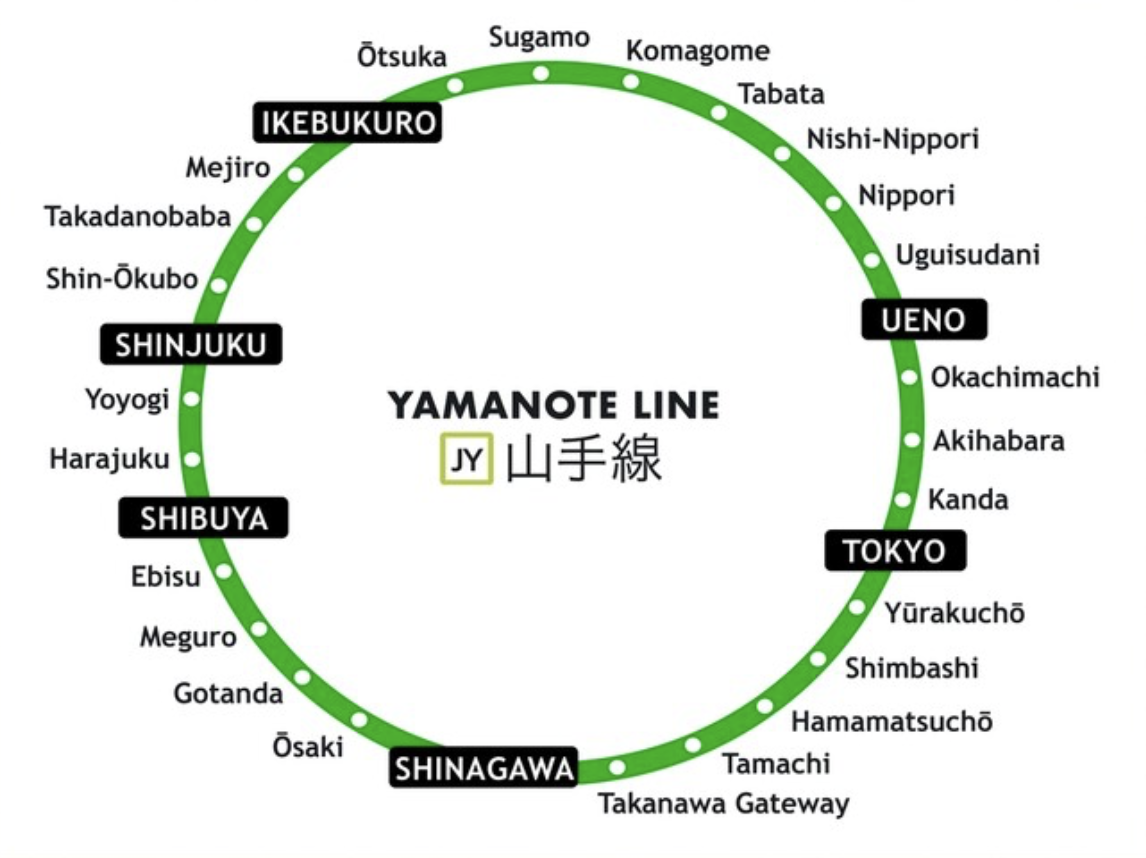
- The most important train line in Tokyo is the Yamanote Ring line. It goes all around the city and connects the most important districts. Basically, if you know where you are relative to the Yamanote, you will never get lost in Tokyo.
- For buses, the system varies. In some cities/lines, you scan your Suica when entering the bus. In other cities, you scan your Suica when leaving the bus. Generally its well marked, just do not assume it works the same on every line.
- You cannot take more than 1 small piece of luggage per person in public transport. Use luggage shipping from the airport or from your hotel. (its fine to have more luggage in the dedicated airport trains)
- The luggage shipping system is amazing and generally same-day or next-day. If you land in the morning, you can send your luggage to your hotel and it will be at your hotel reception before 6PM generally. Hotels can ship luggage to any other hotel within 1 day.
- For short trips to other cities, consider train station coin lockers. You can generally use them for up to 3 days (CHECK, its well designated in each train station), and perfectly safe.
Restaurants General Tips
- If a spot has a queue for lunch, its worth going. If no queue, it may be a trap. For dinner there are less queues / more reservations. The queues go very fast, never be intimidated by them.
- The #1 reason to get a good hotel is a concierge. Many nice restaurants will NOT take a direct reservation from a foreigner without a good hotel vouching for you.
- For direct restaurant reservations, the main websites are Tablecheck and Tableall. For higher end places JPNEAZY and Pocked Concierge are paid reservation services.
- Almost all reservations at higher end places must be confirmed with credit card, and generally have a 3 days cancellation time with fairly draconian fines.
- Top-end Michelin starred Restaurants should be booked 1 year in advance (6 months via Hotel Concierge). Other high end / hype restaurants 3-4 months in advance. (2 months via Hotel Concierge)
- Most casual restaurants have one item or type of food. Also there are NO substitutions, NO alterations. They generally will not accommodate (and if they do, they will despise you). Do NOT go in a place assuming US service. Even leaving out 1 ingredient ("no onions") is generally impossible. So just chose restaurants where you like the food as-is / deal with it.
- Many restaurants have half prices on everything for lunch vs. dinner, for the exact same food.
- Most good restaurants have multiple branches - this is not a bad sign. The main location is called the "honten" and is usually the most atmospheric and has the OG chef. The branches are often bigger and have smaller queues. In general, the quality is consistent across all locations, but there are exceptions. (e.g. for Ginza Birdland, only go to the Honten)
Other Tips
Find some more specific advice for Tokyo & Kyoto, incl Restaurants recs, here: Japan Tips - Itineraries & Recommendations